HealthFlex
×
  • Home
  • Our Hospitals
    • 7Med Hospital – Mau
    • 7Med Hospital – Moradabad
    • 7Med Hospital – Varanasi
  • Our Clinics
    • 7Med Alwar – Solanki Hospital
    • 7Med Bahadurgarh – JJIMS
    • 7Med Bareilly – Keshlata Hospital
    • 7Med Bareilly – RMC Hospital
    • 7Med Bareilly – Sai Sukhda Hospital
    • 7Med Bikaner – Apex Hospitals
    • 7Med Faridabad – Dr. Suraj Prakash Aarogya Kendra
    • 7Med Gurugram – Vivekanand Arogya Kendra
    • 7Med Jaipur – Apex Hospital
    • 7Med Jaipur – CKS Hospital
    • 7Med Jamshedpur – Mercy Hospital
    • 7Med Kashipur – Shree Krishna Hospital
    • 7Med New Delhi – Model Eye Hospital
    • 7Med New Delhi – Primus Hospital
    • 7Med Rewari – Katyal Hospital
    • 7Med Rishikesh – AIIMS
    • 7Med Rudrapur – The Medicity
    • 7Med Shahjahanpur – VAMC Rohilkhand Hospital
    • 7Med Trome Multi Speciality Hospital – Muzzaffarpur
  • Our Academy
    • 7Med Academy Ballabgarh | Faridabad
  • Our Services
  • Knowledge Base
    • Kidneys & You
      • What are Kidneys ?
      • What do Kidneys Do ?
      • How does our kidney work?
      • What is Kidney Disease ?
      • Who are more prone to Kidney Disease ?
      • Treatment Options
        • Treatment Options
        • Kidney Transplant
      • BMI Calculator
    • Anaemia Management
      • Anaemia Symptoms
      • Fast Facts on Anaemia
      • Anaemia Monitoring
      • Anaemia Investigation
      • What is Erythropoietin?
    • Dialysis Adequacy
      • Dialysis Dose & Adequacy
      • Urea Reduction Ratio (URR)
      • KT/V
      • URR & KT/V
      • Improving KT/V
    • Vascular Access Management
      • Vascular Access & its Types
      • Taking Care of your Access
      • Taking care of your catheter
      • Catheters
    • Diet & Fluid Control Tips for Dialysis Patients
      • Make your low salt food Tasty!
      • Break the Salt Addiction
      • Avoid Artificial Salt Substitutes, Go Natural!
      • How to manage your daily fluid quota?
      • The Art of Savouring for Fluid Control
      • Few tips to control thirst & fluid intake
      • 5 Potassium Rich Fruits that CKD Patients Should Avoid
      • 5 Potassium Rich Vegetables that CKD Patients Should Avoid
    • Kidney Friendly Recipes
      • Kidney Friendly Recipe – Baingan Bharta
      • Kidney Friendly Recipe – Berry Tofu Smoothie
      • Kidney Friendly Recipe – Chana Dal Soup
      • Kidney Friendly Recipe – Masala Bhindi
      • Kidney Friendly Recipe – Mixed Veg Curry
      • Kidney Friendly Recipe – Oats Chila
      • Kidney Friendly Recipe – Omelet
      • Kidney Friendly Recipe – Rava Appam
      • Kidney Friendly Recipe – Sabudana Khichdi
      • Kidney Friendly Recipe – Vegetable Cutlet
    • Kidney Friendly Food
      • Kidney Friendly Food – Blueberries
      • Kidney Friendly Food – Green Vegetables
      • Kidney Friendly Food – Grapes
      • Kidney Friendly Food – Kidney Beans
      • Kidney Friendly Food – Lemon
      • Kidney Friendly Food – Strawberry
    • Health and Wellbeing
      • How to keep yourself and your kidneys healthy?
      • Take morning walks to stay healthy
      • Tips to increase your immunity
    • Blog
  • Careers
  • FAQ

Few tips to control thirst & fluid intake

25th April 2020Bhavini BhardwajKidney Diet Tips
Few tips to control thirst & fluid intake

Water is life. Without it, nothing would live on the planet.

So it is really difficult when you start dialysis, and you are told by your clinical care team to restrict your daily intake of water.

But it is very important for dialysis patients to limit their fluid intake. They cannot stay healthy otherwise.

So, we are sharing here a few tips that will help you to stick to your daily fluid quota.

Few Tips to control thirst & limit fluid quantity:

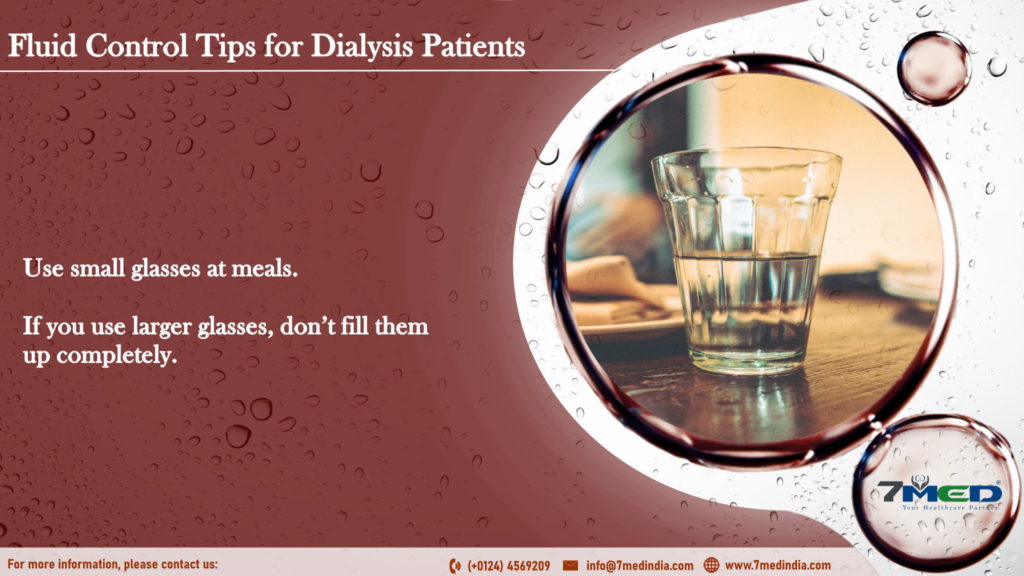
  • Use small glasses, such as juice glasses, at meals. If you use larger glasses, don’t fill them up completely.
  • Stay cool. Keeping cool will help reduce your thirst.
  • Eat a piece of cold or frozen fruit, like grapes, strawberries or blueberries.
  • Freeze your favorite beverage in a bottle and sip as the fluid melts.
  • Suck on a piece of sugar-free hard candy or chew sugar-free gum. This will keep your mouth lubricated and you won’t feel thirsty.
  • Rinse your mouth with mouthwash. This helps get rid of the dry mouth feeling and reduces thirst.
  • Weigh yourself at the same time every day and adjust fluid intake accordingly. This works very well if the amount of food your consume daily does not vary much.
  • Take one cup of tea or coffee per day. Remember that fluid intake includes not only water but also tea, coffee, milk, juice, ice cream, cold drinks, soup, and other foods with a high water content such as watermelon, grapes, lettuce, tomatoes, celery, gravy, gelatin, and frozen treats like popsicles.
  • When you are thirsty, take only a small amount of water or try ice. Take a small ice cube and suck it. Ice stays longer in the mouth than liquid, so it is more satisfying than the same amount of water.
  • Take sips, not gulps. Try to savor whatever liquid you’re drinking and make it an experience, not just a thirst quencher.
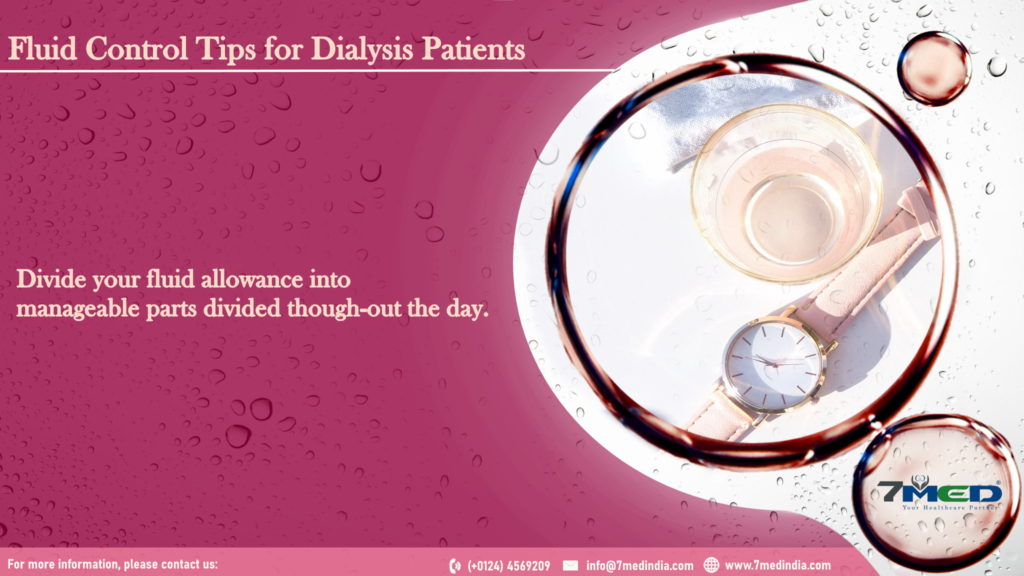
  • Divide your fluid allowance into manageable parts. For example, if you can have 1 litre per day, you could drink at 4 different times of the day.

FIND OUT MORE
<< The Art of Savouring for Fluid Control5 Potassium Rich Fruits that CKD Patients Should Avoid>>

Read More

How to manage your daily fluid quota?

20th April 2020Bhavini BhardwajKidney Diet Tips
How to manage your daily fluid quota?

We are told that a healthy body normally needs up to eight glasses of water a day to maintain fluid balance. However, this is not true if you are suffering from chronic kidney disease (CKD) that has progressed to its later stages. Then drinking this much water would lead to fluid retention in your body and can have drastic implications.

Most dialysis patients need to limit their fluid intake to 1 litre per day (4 cups of 250 ml). Certain studies have shown that fluid gains greater than 1.5 kg between dialysis treatments were common in 86% of patients examined. This fluid gain has also been associated with cardiovascular death.

Why is regulation your fluid intake important if you are on Dialysis?

  • You will feel better and stay healthier when you limit your fluid consumption.
  • Excess fluid in your body may give you headaches and you may feel low on energy.
  • Excess fluid can also cause swelling in your face, hands and feet.
    You will have trouble breathing if fluid accumulates in your lungs.
    Too much fluid will also stretch your heart muscles and cause damage to your heart.
  • Too much fluid in your body will result in high blood pressure & that can lead to a stroke.

How can you easily track & manage your fluid intake?

  • Talk to your doctor and dietician about specific weight and fluid restriction goals for you.
  • Divide your daily fluid quota into smaller parts and consume it at different times during the day.
  • Make note of your fluid intake in a diary or notebook. Include the liquids you consume with meals, snacks and medications.
  • Measure fluid amounts to ensure correct portion sizes.
  • Use a mobile app that helps you track fluids.
  • Use a water bottle that is marked with your daily liquid goal in litres or millilitres.

So it is recommended to measure your fluid intake because it will help get the best out of your dialysis treatment. Reducing fluids will help you feel better and stay healthier.
Source(s)

  • Journal of Renal Nutrition

FIND OUT MORE

<< Avoid Artificial Salt Substitutes, Go Natural!The Art of Savouring for Fluid Control>>

Read More

Avoid Artificial Salt Substitutes, Go Natural!

17th April 2020Bhavini BhardwajKidney Diet Tips
Avoid Artificial Salt Substitutes, Go Natural!

“A balanced diet is a cookie in each hand.”

The quote holds a strong message as balanced intake of every necessary ingredient is important for a fit body. Being affected by any sort of kidney disease, it becomes really very important to take care that each and every ingredient is being included in the diet in appropriate amounts.

Although salt is a vital part of any dish but in order to have the boon of health your diet should contain very limited quantities of it. To do away with the harmful effects of salt, quite a few of us adopt the usage of Artificial Salt Substitutes in our diet.

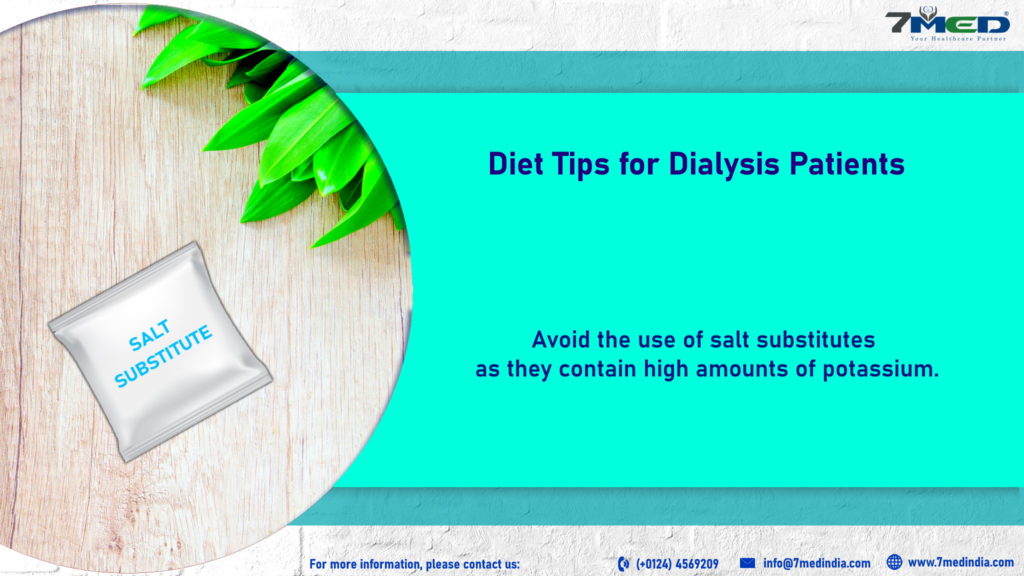
These salt substitutes are not a healthy option for patients suffering from kidney ailments. Many such salt substitutes contain potassium chloride in place of sodium chloride, due ti their similar tastes.

As you must already know, potassium consumed in excess is harmful. This is especially true for people with kidney problems as they are unable to rid their bodies of this excessive potassium. This can result in a deadly situation. If you have kidney problems or are on medication for your heart, kidneys or liver, it is best to check with your physician before using salt substitutes that have potassium in place of sodium.

Ideally, the best way is to go completely “Salt Free”. Instead of mimicking the taste of sodium with salt substitutes, start experimenting with other more flavourful herbs and spices to add zest to your meals.

Some Natural Salt Substitutes that you can use are:-
1. Mint
2. Rosemary
3. Nutmeg
4. Basil
5. Cardamom
6. Chili
7. Cinnamon
8. Chives
9. Coriander
10. Dill
11. Cumin
12. Ginger
13. Oregano
14. Turmeric

These precautions must be taken by a dialysis patient to live a healthy life. And when you manage to obtain health, happiness follows suit!

Source(s)

  • Cleveland Clinic Health Articles
  • British Heart Foundation – Heart Matters Magazine

FIND OUT MORE

<< Break the Salt AdditionHow to manage your daily fluid quota?>>

Read More

Latest Posts

  • Why Kidney Disease is Called a “Silent Killer” in India
  • How to Choose the Right Dialysis Centre in Delhi NCR (And Avoid Costly Mistakes)
  • 7MED Welcomes Strategic Investment from PVP Ventures to Accelerate Healthcare Innovation
  • How to keep yourself and your kidneys healthy?
  • Take morning walks to stay healthy

Knowledge Base

1. Anaemia Management
  • Fast facts on Anaemia
  • Anaemia Symptoms
  • Anaemia Investigation
  • What is Erythropoietin?
  • Anaemia Monotoring
2. Dialysis Adequacy
  • Dialysis Dose & Adequacy
  • Urea Reduction Ratio
  • KT/V
  • URR & KT/V
  • Improving KT/V
3. Vascular Access Management
  • Vascular Access & its Types
  • Taking care of your access
  • Catheters
  • Taking care of your Catheter
4. Diet & Fluid Control Tips for Dialysis Patients
  • Make your low salt food Tasty!
  • Break the Salt Addiction
  • Avoid Artificial Salt Substitutes, Go Natural!
  • How to manage your daily fluid quota?
  • The Art of Savouring for Fluid Control
  • Tips to control thirst & fluid intake
  • 5 Potassium Rich Fruits That CKD Patients Should AVOID
  • 5 Potassium Rich Vegetables That CKD Patients Should AVOID
5. Kidney Friendly Recipe
  • Chana Dal Soup
  • Mixed Veg Curry
  • Baingan Bharta
  • Masala Bhindi
  • Rava Appam
  • Oats Chila
  • Sabudana Khichdi
  • Berry Tofu Smoothie
  • Vegetable Cutlet
  • Mango Rice
  • Omelet
6. Kidney Friendly Food
  • Blueberries
  • Grapes
  • Kidney Beans
  • Green Vegetables
  • Lemon
  • Strawberries
7. Health and Wellbeing
  • How to boost your immunity?
  • Tips to increase your immunity
  • Take morning walks to stay healthy
  • How to keep yourself and your kidneys healthy?

7Med India

Kidney Care Center

+91 7718-771-888

info@7medindia.com

www.7medindia.com

M3M Urbana Premium, Floor 12A, Sector 67, Golf Course Ext. Road, Gurugram, Haryana - 122101, India

Quick Links

  • About Us
  • Advisory Panel
  • Our Clinics
  • Our Services
  • Contact Us
  • Careers

Policy

  • Terms & Conditions
  • Privacy Policy
  • Refunds & Cancellation
Copyright ©2016 all rights reserved